Furnace Tune-Ups in Unionville, PA
The cheapest furnace repair is the one found in September.
A real tune-up is a safety test and a cleaning, not a glance at the filter. This page lays out what a complete visit covers for gas and propane furnaces, oil systems and heat pumps, a month-by-month Unionville calendar, the jobs you can do yourself, and what tune-ups typically cost.
- Free referral service, not a contractor
- Independent local HVAC companies
- No obligation
Why a fall tune-up matters before a Unionville January
A tune-up catches worn parts and safety problems while the weather is mild and appointments are easy to get. In January, the same weak part becomes a no-heat call on the coldest night, often with a longer wait and a higher after-hours rate.
Furnaces and boilers around here run hard for months. Nearby West Chester averages a January low of about 22°F, and the record low is minus 16°F. Heating equipment that sat idle all summer gets its first real test in late October, and that's when residue on a flame sensor or a tired capacitor shows up.
A tune-up is also when carbon monoxide risks get caught. A cracked heat exchanger, a rusted flue or a blocked chimney gives no warning you can see from the thermostat. Measuring combustion and CO is the only way to know.
Finally, many manufacturer warranties expect the equipment to be maintained. Keeping a yearly service record protects that coverage, which matters more on a newer system than an old one.
What a complete gas or propane furnace tune-up includes
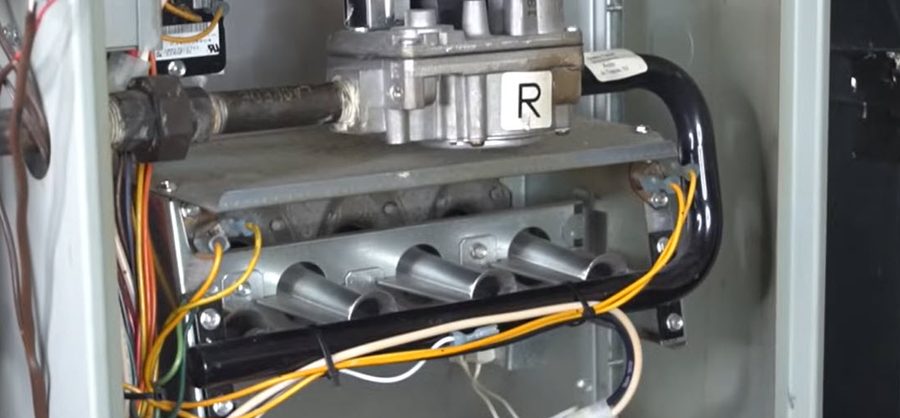
A full visit cleans the burners and flame sensor, tests the ignitor and every safety control, measures gas pressure and temperature rise, inspects the heat exchanger and venting, clears the condensate drain on high-efficiency models, and finishes with a CO reading and written results.
| Task | What it catches | Shows up on a real report as |
|---|---|---|
| Clean burners and flame sensor | Delayed ignition, short flame-out cycles | Sensor microamp reading, or a note that it was cleaned |
| Test hot surface ignitor | An ignitor close to cracking | Resistance reading in ohms |
| Measure gas or propane pressure | Weak or overfired burners, wrong propane setup | Inlet and manifold pressure |
| Measure temperature rise | Poor airflow, overheating, dirty coil | Supply and return temperatures |
| Inspect heat exchanger | Cracks and rust that can leak CO | A note on what was seen, ideally with a photo |
| Test high limit, rollout and pressure switches | Safety controls that won't trip when they should | Each control listed as tested |
| Check inducer, blower motor and capacitor | A capacitor or motor near failure | Capacitor microfarad reading, motor amps |
| Inspect flue, chimney connector or PVC vents | Blocked, sagging or loose venting | Draft reading, or a vent condition note |
| Clean condensate trap and drain (90%+ furnaces) | Pressure switch lockouts, water leaks | Noted as cleaned |
| Check thermostat and wiring | Bad calls for heat, loose wires | Noted as checked |
| CO reading at the furnace and in the house | Combustion and venting problems | CO numbers in parts per million |
Oil burner service and heat pump maintenance are different jobs
Oil systems need a yearly cleaning with parts replaced, not just an inspection. Heat pumps need electrical, airflow and refrigerant checks and run in both seasons. Each has its own checklist.
Oil furnace or oil boiler cleaning
| Task | Why |
|---|---|
| Replace the nozzle | A worn nozzle sprays unevenly and builds soot |
| Replace the oil filter and pump strainer | Catches tank sludge before it clogs the burner |
| Clean the combustion chamber and heat exchanger | Soot insulates the heat exchanger and wastes oil |
| Check electrodes and photocell | Weak ignition and lockouts |
| Combustion efficiency test | Shows how much heat goes up the chimney |
| Smoke test | Confirms clean burning after adjustment |
| Draft test | Confirms the chimney pulls exhaust out |
| Inspect tank, lines and flue pipe | Rust, weeps and loose joints |
Boilers also need the gauge, relief valve and expansion tank checked. See boilers and radiators and oil heat repair.
Heat pump maintenance
| Task | Why |
|---|---|
| Measure airflow and refrigerant charge | Low charge cuts heat and strains the compressor |
| Check for refrigerant leaks | Topping off without fixing a leak doesn't last |
| Clean and tighten electrical connections | Loose terminals burn and fail |
| Test capacitor and contactor | The most common outdoor unit failures |
| Inspect blower, indoor coil and filter | Dirt chokes airflow |
| Test defrost and reversing valve operation | Ice buildup in winter |
| Check aux heat and dual fuel lockout | Backup running too often |
| Verify thermostat and controls | Heating and cooling locked out of each other |
| Clear drain and outdoor coil | Leaks and restricted outdoor airflow |
Energy.gov recommends professional heat pump service at least once a year. More in heat pump repair.
How to spot a quick-look tune-up
A quick look lasts a few minutes, uses no instruments and ends with a sales pitch. A real tune-up takes longer, involves meters and a combustion analyzer, and leaves you with written readings you can compare next year.
Low-price tune-up offers aren't automatically bad. Some companies use them to meet new customers and do a thorough job. The way to tell is what happens during the visit and what you get afterward.
If a technician says you need a new furnace on a tune-up visit, ask to see the evidence: a photo of the crack, a CO reading, or the failed test. A second opinion is reasonable before any replacement.
Signs it was only a quick look
- In and out in well under half an hour
- No meters, gauges or combustion analyzer came out
- The burner door or blower panel was never removed
- No CO reading, or only a vague "looks fine"
- On oil: no new nozzle or filter
- Nothing written down except a price for new equipment
Signs it was a real tune-up
- Readings for gas pressure, temperature rise and CO
- Safety controls listed as tested
- Photos or notes on the heat exchanger and venting
- Parts replaced named on the invoice
- Clear advice on what's urgent and what can wait
A September to May heating calendar for Unionville
Book the tune-up in September or October, get fuel and filters squared away before Thanksgiving, then shift to clearing vents and watching fuel through the cold months. Spring is for planning any replacement.
| When | Local marker | Heating to-do |
|---|---|---|
| September | School is back in the Unionville-Chadds Ford district | Book the tune-up. Buy a season's worth of filters. Test CO and smoke alarms. |
| Early October | Unionville Community Fair, October 2 to 4, 2026, its 102nd year | Fire the system on a cool evening. A brief burning-dust smell is normal. Fill oil or propane before the rush. |
| Late October | First frosty mornings | Clear leaves from PVC vents and the outdoor heat pump. Bleed hot water radiators if needed. |
| November | LIHEAP opens November 2, 2026. A Longwood Christmas begins November 20. | Apply for LIHEAP if you need it. Last calm window for a planned replacement. |
| December | PUC winter shutoff protections start December 1 | Check filters monthly. Keep the area around the furnace clear of holiday storage. |
| January | A Longwood Christmas runs to January 10, 2027. Coldest stretch. | Clear vents and outdoor units after every snow. Watch fuel gauges closely. |
| February | Late-winter storms | Same as January. Check attic air handler drains. |
| March to April | Shutoff protections end March 31. LIHEAP closes April 23, 2027. | Note any problems from the winter. Get replacement quotes while there's time. |
| May | Willowdale Steeplechase (May 9 in 2026) | Heat pump owners: spring service for cooling. Change the filter before AC season. |
For help paying for heat, see rebates and LIHEAP. If you run short of fuel, crisis grants go through the Chester County Assistance Office.
Maintenance you can do yourself
Owners can handle filters, vents, registers, drains, outdoor clearance and CO alarms. None of these involve opening the burner compartment or touching gas or oil connections.
- Filters. Use the size on the old filter's frame. A pleated MERV 8 to 11 filter suits most homes. Check monthly in winter. Energy.gov suggests replacing heat pump filters about every three months or as the maker says.
- Supply and return registers. Keep them open and clear of rugs and furniture.
- PVC vents. On 90%+ furnaces, keep both pipes clear of leaves, snow and ice.
- Condensate. Make sure the pump is plugged in and the drain line isn't kinked.
- Outdoor heat pump. Keep plants and fences back. InspectAPedia's rule of thumb is about 24 inches, and HVAC.com suggests shoveling at least 18 inches around it after snow. Your unit's manual is the final word.
- CO alarms. One on every level and outside sleeping areas. Test monthly. Replace by the date printed on the alarm.
- Baseboard and radiators. Vacuum dust from fins and keep furniture off them.
Leave these to a technician
- Anything behind the burner door or inside the outdoor unit's panels.
- Gas, propane or oil line work of any kind.
- Relighting after a propane run-out. It needs a leak check first.
- Repeated oil burner resets. Press the red button once only.
- A gas smell or CO alarm. Leave the house and call 911 from outside.
Do manufacturer warranties require maintenance?
Many do, at least in their fine print. Lennox's limited warranty says failing to maintain the equipment voids it, requires a professional to install and maintain it per Lennox's instructions, and says claims may require proof of maintenance. Keeping yearly invoices is the simplest protection.
Registration is a separate step. Carrier, for example, asks owners to register within 90 days of installation. Without registration, its standard coverage is 5 years on parts with no labor, according to Carrier's warranty page. Where state law doesn't let warranty terms depend on registration, Carrier says products automatically get a 10-year parts limited warranty.
Other brands set their own terms. Check the warranty document for your model, register it if required, and keep every service invoice with the readings on it. Manufacturer warranties usually cover parts, not the labor to install them, unless the installer adds labor coverage.
Keep a heating file. One folder with the model and serial numbers, install date, registration confirmation, each year's tune-up report and any repair invoices. It helps with warranty claims, PECO rebates and selling the house.
How to compare maintenance plans
A maintenance plan bundles yearly visits with perks like priority scheduling and repair discounts. It's worth it only if the visits are thorough and the perks are ones you'll use. Compare plans on what's in writing, not on the monthly price.
What's covered
How many visits a year, and for which systems? A home with a furnace, an attic air handler and a heat pump needs all three listed. Does the visit follow a full checklist like the ones above?
What it's worth
Priority service in a cold snap, repair discounts and waived trip fees only matter if they're specific. Ask for the discount percentage and whether it applies to nights and weekends.
What to watch
Automatic renewals, cancellation terms, and whether parts like nozzles and filters on oil are included. A plan is a contract, so read it before signing.
Fuel suppliers in oil and propane country often sell their own service plans with deliveries. Compare those the same way. Before hiring anyone, check their HICPA registration at hic.attorneygeneral.gov and see Pennsylvania contractor rules. This site doesn't endorse any plan or company.
Tune-up questions from Unionville homeowners
When is the best time to book a furnace tune-up?
September through early November. The weather is mild, appointments are easier to get, and any parts can be ordered before you need heat every day. Heat pump owners often add a spring visit for cooling.
Do I really need a tune-up every year?
For oil, yes. The nozzle and filter need replacing and soot needs cleaning every season. For gas, propane and heat pumps, yearly service is what most manufacturers and Energy.gov recommend, and it's when CO and safety controls get tested.
How long should a tune-up take?
Longer than a quick look. A thorough gas visit involves removing panels, cleaning, and taking several readings. Oil cleanings take longer because parts are replaced and combustion is tested after adjustment.
What should I get in writing after a tune-up?
A list of tasks done, the readings taken, any parts replaced, and anything that needs attention ranked by urgency. Keep it with your warranty papers. Next year's readings mean more when you can compare them.
Can a tune-up void or protect my warranty?
Skipping maintenance can put coverage at risk. Some warranties, like Lennox's, say failing to maintain the equipment voids it and that claims may need proof of maintenance. Keep every invoice.
What MERV filter should I use?
For most homes, a pleated MERV 8 to 11 filter in the size printed on your old filter. Very restrictive filters can choke an older furnace with a small return. Ask your technician before going higher.
Is a very cheap tune-up offer a scam?
Not necessarily. Some companies use low-price offers to win new customers and still do the full job. Judge it by whether instruments come out, panels come off, and you get written readings rather than only a sales pitch.
Does PECO offer a rebate for maintenance?
PECO lists up to $50 for qualifying AC or heat pump maintenance, applied for within 90 days. Ask whether your visit qualifies, and confirm current terms on peco.com.
Should I cover my heat pump for winter?
Generally no. A heat pump runs all winter and needs open airflow around it. Keep it clear of snow and plants instead, and make sure no roof edge drips water directly onto it.
Is this site a heating company?
No. UnionvillePAFurnaceRepair is a free referral service that connects you with independent local HVAC companies. They set their own prices, plans and terms. This site doesn't perform or guarantee any work and may be paid for referrals.
Sources
- Energy.gov: Operating and maintaining your heat pump.
- Lennox residential limited warranty (PDF).
- Carrier: Warranty registration and information.
- InspectAPedia: Clearance distances for outdoor HVAC units.
- HVAC.com: How to prep your HVAC for winter storms.
- Local calendar dates, LIHEAP dates, PUC protections, PECO rebate amounts and filter guidance, as summarized on the Unionville furnace guide.
- Pennsylvania Attorney General: Home Improvement Contractor registration.
Written by Lawrence. Updated October 25, 2026. Facts on this page were checked against the public sources listed above.
This is general information from a free referral service, not a heating contractor. For gas smells or carbon monoxide alarms, leave the house and call 911.
Related furnace help
Ready to book a fall tune-up? Get connected with local heating companies.
Have your fuel type, the furnace or boiler brand and its rough age handy. Ask what the visit includes before you book.
One call to (724) 241-4851 connects you with independent local HVAC companies that serve Unionville and nearby Chester County communities. It's free, with no obligation.
Have this ready when you call
- Your town or road
- Your fuel: oil, propane, gas or electric
- What the system is doing, and any blinking light code
- Whether you smell gas or oil (if so, leave and call 911 first)
Free referral service. Not a heating contractor. Companies are independent and set their own prices.