UnionvillePAFurnaceRepairFree furnace referrals · Unionville, PA (724) 241-4851
Chester County · Unionville and East Marlborough

Furnace Repair in Unionville, PA

No heat, odd noises, or a furnace that keeps shutting off? This guide explains what usually goes wrong with furnaces and boilers in Unionville-area homes, from stone farmhouses on oil to newer homes with heat pumps. When you need a pro, one call to (724) 241-4851 connects you with local HVAC companies.

Written by Lawrence · Updated October 2026

−16°F

The record low for nearby West Chester.

An average January night still drops to about 22°F. That's when a weak ignitor, a clogged oil nozzle or a tired circulator pump gives out. The no-heat checklist below covers what to check first.

Source: West Chester climate data. Checked October 2026.

Call (724) 241-4851
  • Free referral service, not a contractor
  • Independent local HVAC companies
  • No obligation
  • Plain-English furnace answers
  • 2026 rebate and LIHEAP dates
The 60-second version

Unionville furnace basics in sixty seconds

  • Furnace stopped working? Check that the thermostat is set to heat, the furnace switch is on, and the filter isn't clogged. On oil heat, check the tank gauge too. If it still won't fire, it's time to call a heating company.
  • Smell gas or fuel oil? Don't touch light switches or the thermostat. Get everyone outside, then call 911 and your gas utility or fuel supplier from outside the house.
  • Repair or replace? If the furnace is under about 15 years old and the repair is modest, repair usually wins. If it's older, needs a major part, or keeps breaking, compare both options side by side.
  • Rebates in 2026: PECO offers rebates on qualifying ENERGY STAR heat pumps and smart thermostats, and separate rebates for its natural gas customers. The federal 25C tax credit ended for equipment installed after December 31, 2025.
  • Help paying for heat: Pennsylvania LIHEAP opens November 2, 2026, with cash grants from $200 to $1,000. It covers oil, propane, gas and electric heat.
  • Best time for a tune-up: September through early November, before the first hard cold snap and the fuel delivery rush.

No heat right now? Do this first.

  1. Smell gas or hear a CO alarm? Leave the house and call 911 from outside. Nothing else matters until responders say it's safe.
  2. Check the thermostat. Set to heat, a few degrees above room temperature, fresh batteries.
  3. Check the furnace or boiler switch near the unit and the breaker in your panel.
  4. Check your fuel. Look at the oil or propane tank gauge. Running out is a common no-heat cause in the country.
  5. Check the filter. A packed gray filter can trip the high limit switch.
  6. Check the white PVC pipes outside on a high-efficiency furnace. Clear snow or ice by hand.
Call (724) 241-4851
Topic by topic

What each heating job involves in Unionville homes

01

Most failures come down to one part

Furnace repair in Unionville

When a furnace quits, a thorough repair visit from any heating company usually follows the same order. Knowing it helps you tell whether a visit was complete:

  1. Confirm the thermostat is calling for heat and has power.
  2. Read the error code from the control board's status light.
  3. Check the filter, blower, inducer motor and pressure switch.
  4. Test the ignitor and flame sensor and watch a full ignition sequence.
  5. Inspect the burners, heat exchanger, flue and vent pipes.
  6. Measure carbon monoxide at the furnace and in the living space.
  7. Explain the problem before any repair is made.
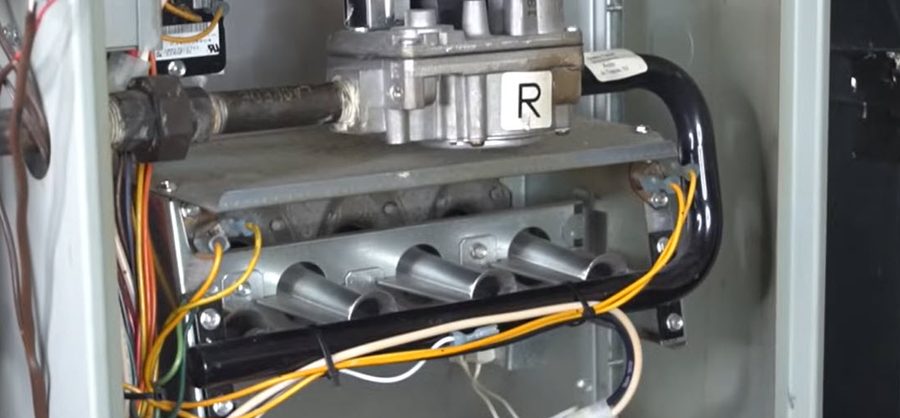
Gas valve and gas line connection inside a residential gas furnace
The gas valve and gas line connection. A careful technician checks this area for leaks and confirms the gas pressure on a repair visit.
Gas furnace burner assembly and manifold below the gas valve
The burner assembly. Dirty burners cause delayed ignition and weak flames, so they should be inspected and cleaned during repairs and tune-ups.

The most common furnace problems

  • Dirty flame sensor. Burners light for a few seconds and shut off. Cleaning or replacing the sensor usually solves it.
  • Failed hot surface ignitor. The inducer runs but the burners never light. Ignitors are fragile and crack with age.
  • Pressure switch or blocked venting. Common after snowstorms on high-efficiency furnaces with frozen PVC or condensate lines.
  • Clogged filter and high limit trips. The furnace overheats and shuts down. Repeated trips can damage the heat exchanger.
  • Blower motor or capacitor failure. Burners run but no air moves, or the motor hums without starting.
  • Bad control board. The furnace does nothing or acts randomly. Boards also fail after power surges from storms.
  • Thermostat faults. Dead batteries, loose wiring or a thermostat that doesn't match the equipment.
  • Oil burner problems. On oil furnaces, a clogged nozzle or filter, a failed fuel pump or a dirty photocell are the usual suspects.

Brands common in local homes include Lennox, Carrier, Bryant, Trane, American Standard, Rheem, Ruud, York, Goodman, Amana, Daikin, Armstrong Air, Thermo Pride, Burnham, Weil-McLain, Buderus and Viessmann.

Furnace not working? Get connected: (724) 241-4851

Full guide: furnace repair in Unionville →

02

Sized by load calculation, not by the old label

Furnace replacement and installation

A new furnace is a big decision in any house. In Unionville, where many homes are large, older or both, sizing and fuel choice matter as much as the brand. Here's what a good replacement looks like.

  • The furnace is sized to your house. Many older systems were oversized decades ago, and additions changed the load since. Oversized furnaces short cycle, wear out faster and leave rooms uneven.
  • The fuel gets a fresh look. Staying on oil, switching to propane, connecting to natural gas where PECO lines run, or moving to a heat pump each change the equipment, the venting and the fuel deliveries or bills you deal with.
  • The venting gets checked. Moving from an 80% to a 95% furnace means PVC venting and a condensate drain. Staying with a chimney may need a stainless liner. Both belong in the written estimate, not as a surprise later.
  • The ductwork gets a look. Stone farmhouses often had ducts added long after they were built. Leaky or undersized ducts waste heat the new furnace makes.
Furnace replacement options for Unionville homes
OptionTypical fit in the Unionville areaNotes
95% to 97% AFUE gas or propane furnaceHomes on PECO gas, or on propane past the gas linesPVC venting and a condensate drain. Check PECO's current gas rebates if you're a PECO gas customer.
Oil furnace or oil boilerHomes already on oil with a sound tank and chimneyKeeps the existing fuel. Chimney liner and tank condition matter.
Heat pump, alone or with a furnace (dual fuel)Homes that also need central air, or want to burn less oil or propaneHeat pump covers most of the season, furnace takes the deep cold. PECO offers heat pump rebates.
Geothermal heat pumpLarger lots and new constructionGround loops need space. Ask about loop type and who services it.

Full guide: furnace replacement →

03

Best booked September to early November

Furnace tune-up and maintenance

A tune-up is the best protection against a January breakdown, and it's when safety problems like a cracked heat exchanger or a blocked flue get caught. A complete gas or propane furnace tune-up should include:

  • Burner and flame sensor cleaning
  • Ignitor test, including a resistance reading
  • Heat exchanger inspection for cracks and rust
  • Gas pressure and temperature rise check
  • Safety control tests: high limit, rollout switches, pressure switch
  • Inducer motor, blower motor and capacitor check
  • Flue, chimney connector or PVC vent inspection
  • Condensate trap and drain line cleaning on high-efficiency furnaces
  • Thermostat operation and wiring check
  • Carbon monoxide reading at the furnace and in the home
  • Written report of anything that needs attention

Oil systems need a yearly cleaning too: a new nozzle and oil filter, a combustion efficiency test, and a smoke and draft test. Skipping it is a common cause of soot and no-heat calls.

Full guide: tune-ups and maintenance →

04

Vulnerable households are urgent

No-heat emergencies

Losing heat in a Chester County winter is more than uncomfortable. Pipes in an unheated house can freeze within hours, and cold is dangerous for older adults, infants and anyone with a health condition. About one in four East Marlborough residents is 65 or older, so a no-heat situation in those homes is urgent.

When you call for help, say whether you smell gas or oil, whether the system makes any noise, what fuel you heat with, and who's in the house. That helps the heating company judge how urgent your call is.

Space heater safety while you wait

Use only space heaters with tip-over and overheat shutoff. Plug them straight into a wall outlet, never an extension cord, and keep them three feet from anything that can burn. Never heat a home with an oven, grill or generator. They can fill a house with carbon monoxide.

Full guide: no heat and emergencies →

05

Still common in older country homes

Oil furnaces and oil boilers

Outside the reach of natural gas lines, many older homes around Unionville, West Marlborough and Newlin still heat with fuel oil, usually through a boiler and radiators or baseboard, sometimes through a forced-air oil furnace.

  • Running out of oil. After a run-out, the burner usually needs to be bled of air and may need a new filter, because sludge from the tank bottom gets pulled in. Automatic delivery helps avoid it.
  • Nozzle, filter and pump. A clogged nozzle or filter starves the flame. A failing fuel pump or a dirty photocell causes lockouts. Most of this is caught at the yearly cleaning.
  • Soot and puffbacks. A delayed ignition can blow soot through the house. If you see soot or hear a whoosh on startup, shut the system off and call for service.
  • Tanks. Old basement tanks rust from the inside, and buried tanks can leak unseen. Ask the heating company to look at the tank and lines during service.

Many owners pair an oil system with a heat pump, so the heat pump carries the mild months and the oil burner covers the coldest days. That cuts oil use without giving up a reliable backup.

Full guide: oil furnace and burner repair →

06

Past the gas lines

Propane furnaces

Plenty of homes and farms in the Unionville area heat with propane. A propane furnace works like a gas furnace, but it needs propane-specific setup and orifices, and it depends on your tank and delivery schedule.

  • Running out of propane. After a run-out, the system needs a leak check before it's relit. That's standard practice and isn't a homeowner job.
  • Low pressure. Regulators freeze or fail in deep cold. The flame lights weakly and then drops out.
  • Wrong conversion. A natural gas furnace moved to propane without the right kit can run dirty or unsafely. Ask the technician to verify the conversion.

Because propane is delivered by truck and stored on site, efficiency matters. A 95% propane furnace or a dual fuel setup with a heat pump often makes sense for a home that burns a lot of propane.

Full guide: propane furnace repair →

07

Popular in newer and larger homes

Heat pumps, dual fuel, mini splits and geothermal

A heat pump moves heat instead of making it, so it heats efficiently through fall, spring and milder winter days. In southern Chester County's climate, many homeowners pair one with an oil, propane or gas furnace. The heat pump runs when it's mild and the furnace takes over in the deep cold.

When a heat pump makes sense

  • You need new central air anyway
  • You heat with oil, propane or electric resistance
  • You want a second heat source

When it might not

  • You have natural gas, a newer furnace and no AC plans
  • Your electrical service needs a major upgrade first

New heat pumps made since January 1, 2025 use lower-impact refrigerants, mainly R-454B or R-32. Existing R-410A systems can still be serviced. Ask which refrigerant an estimate includes and whether the indoor coil matches.

Geothermal heat pumps use buried loops or wells instead of an outdoor unit. They suit larger lots, and their loops last for decades, but they need a company experienced with ground-source systems for service.

Ductless mini splits suit stone homes, converted barns and additions that never had ducts, and rooms the main system never reaches well.

Full guide: heat pumps and dual fuel →

08

Radiators, baseboard and radiant floors

Boilers, radiators and radiant heat

Hot water boilers. Many older Unionville homes heat with an oil or gas boiler feeding cast iron radiators or baseboard. Common problems are failed circulator pumps, air in the lines, leaking relief valves and expansion tanks that have lost their charge.

Steam systems. Less common, but still found in some older village homes. Banging pipes, uneven heat and low-water cutoff trips usually trace back to water level, venting or pipe pitch.

Radiant floors. Newer additions and high-end renovations often use radiant tubing in the floor, fed by a boiler or a water heater. Mixing valves, zone pumps and controls are the usual trouble spots.

Electric heat. Baseboard heaters and electric furnaces show up in additions, apartments over garages and some barns. No combustion and no carbon monoxide, but they use a lot of electricity in a long winter. A heat pump is often worth comparing.

Full guide: boilers and radiators →

09

More systems, more to check

Large homes, zoned systems and outbuildings

Many homes in East Marlborough and the surrounding townships are big enough to need more than one system: a basement furnace for the first floor, an attic air handler or heat pump for the second, and sometimes separate heat for a barn, studio or guest house.

  • Attic air handlers. Clogged condensate drains overflow into ceilings. A float switch and a secondary drain pan are worth checking every season.
  • Zone dampers and controls. One zone that never heats is often a stuck damper or a failed zone board, not a bad furnace.
  • Barns and outbuildings. Unit heaters and propane heaters in barns and workshops need venting and clearance checks like any gas appliance.
  • Second homes and travel. A smart thermostat with temperature alerts and a yearly service visit help protect a house that sits empty for weeks.
10

One system, two seasons

Heating and air conditioning together

A furnace and central air conditioner share the same blower, ductwork and indoor coil. That's why heating and cooling decisions are often best made together, even when only one side has failed.

Should you replace the furnace and air conditioner at the same time?

Often, yes, if both are old. A new furnace paired with a worn AC coil can limit airflow, and a new AC paired with an old furnace blower may not reach its rated efficiency. Replacing both at once also means one installation and matched equipment. If the air conditioner is fairly new, it can usually stay, as long as the new furnace's blower and coil match it. Since 2025, new AC and heat pump systems use R-454B or R-32 refrigerant, so pairing a new outdoor unit with an old indoor coil usually isn't possible.

Split system or package unit?

  • Split system. The most common setup: a furnace or air handler indoors and an AC or heat pump outside.
  • Package unit. Heating and cooling in one cabinet outside on a slab, ducted into the house. Suits homes with no room inside for a furnace.
  • Ductless mini split. Heating and cooling for individual rooms with no ducts at all.
11

Where a lot of heat gets lost

HVAC ductwork in older Unionville homes

A furnace can only deliver the heat its ductwork lets through. In stone and frame homes that started with fireplaces, stoves or radiators, ducts were often added much later, squeezed through closets, thick walls and floor joists.

  • Too few returns. One small return grille for a whole house starves the furnace of air. It runs hot, trips the high limit and wears out sooner.
  • Leaky joints and panned joists. Unsealed seams and floor joists used as ducts leak heat into the basement and pull dusty air into the system.
  • Long or crushed runs. Upstairs bedrooms and additions at the end of long runs stay cold.
  • Unconditioned attics. Attic ducts in summer heat and winter cold lose a lot of energy unless they're sealed and insulated.

A careful technician measures airflow and static pressure, then explains which duct fixes matter now and which can wait. Sealing and adding a return are often the simplest comfort upgrades in an older house.

Furnace brands

Furnace and boiler brands in Unionville homes, and who makes them

Many brands share a parent company, factories and parts. Knowing the family helps when you talk with a heating company.

Furnace and HVAC brand families
Parent companyBrands you'll see in Chester County homesGood to know
CarrierCarrier, Bryant, Payne, plus the ICP brands Heil, Tempstar, Comfortmaker and ArcoaireBryant and Carrier furnaces are close cousins. Payne is the entry line.
DaikinGoodman, Amana, DaikinGoodman and Amana share a lot of engineering. Warranty terms can differ.
Trane TechnologiesTrane, American StandardTrane and American Standard are largely the same equipment.
Lennox InternationalLennox, Armstrong Air, Ducane, AirEase, ConcordLennox is sold through Lennox dealers. Armstrong Air and Ducane are the Allied Air side.
RheemRheem, RuudSister brands.
Johnson ControlsYork, Coleman, LuxaireYork and Coleman share platforms.
Boiler makersBurnham, Weil-McLain, Buderus, Viessmann, Peerless, NavienCommon names on oil and gas boilers in older homes.
Oil furnacesThermo Pride, Lennox, Rheem, WilliamsonOil furnaces are a smaller market, so parts and experience vary by company.
Mitsubishi ElectricMitsubishiBest known for ductless mini split heating and cooling.

Brand families change as companies buy and sell product lines. Check the label on your unit and the manufacturer's site for warranty details.

What's the best furnace brand?

The installation matters more than the badge. A correctly sized, well-vented furnace from any major brand will outlast a top-name furnace that's oversized, starved for return air or badly vented. Look at the warranty length, whether it's registered, and whether local companies can get parts quickly in January.

Comparing brands fairly

Each major brand makes 80% and 95% gas furnaces, single-stage to variable-speed. The real differences are warranty terms, dealer support and features like modulating gas valves. Ask for comparable models side by side so you're comparing like with like.

Done right

What a proper high-efficiency furnace installation looks like

Most problems with new furnaces trace back to the installation, not the equipment. Here's what should be in place when any installer leaves.

Diagram of a high-efficiency gas furnace installation Return air passes through a filter into the blower, across the burners and heat exchanger and out the supply plenum through the AC coil. PVC intake and exhaust pipes run outside above the snow line. A condensate trap drains to a floor drain, and a gas line with a shutoff valve and drip leg feeds the furnace. Supply plenumAC coil on top Heat exchangerand burners Inducerand controls Blower Filter Return air in Warm air to rooms Exterior wall PVC exhaustand intake, keptabove snow line Condensate trapto floor drain or pump Gas lineshutoffdrip leg
Simplified diagram of an up-flow 95% gas or propane furnace in a basement.
  • Load calculation on file so the furnace size matches the house.
  • PVC vents sloped and terminated correctly, above the expected snow line and away from windows.
  • Condensate trap and drain protected from freezing, with a pump if there's no floor drain.
  • Gas line with a shutoff valve and drip leg, leak-tested before startup.
  • Water heater draft rechecked if the furnace left a shared chimney.
  • Enough return air, with a filter rack that seals and a filter you can buy locally.
  • Gas pressure and temperature rise measured and recorded at startup.
  • Carbon monoxide readings at the flue and in the living space.
  • Warranty registered and paperwork left with you, along with any rebate forms.
Catch it early

Warning signs your furnace needs attention

Furnaces and boilers rarely fail without warning. Most give weeks of clues. Catch them in the fall and you avoid a no-heat night in January.

What you hear

  • Squealing from a worn blower bearing or belt
  • Clicking with no ignition
  • Rattling from a loose panel or failing inducer
  • A bang or whoosh on startup, which means delayed ignition

What you see

  • Yellow or flickering flame instead of steady blue
  • Rust or water around the base
  • Soot near the furnace, boiler or registers
  • A blinking status light. Write down the pattern before you call.

What you feel and smell

  • Rooms that never warm up
  • Short cycling every few minutes
  • Burning dust on first start is normal briefly. Hot plastic is not.
  • Rotten egg or heavy oil smell: leave and call 911

What your bills say

  • Oil or propane deliveries coming faster than usual
  • Repairs in back-to-back winters
  • Headaches that ease outside the house: get out and call 911
Local conditions

What Unionville winters ask of a furnace

Unionville sits in the rolling hills of southern Chester County, roughly 350 to 500 feet above sea level, in the transition between a humid continental and humid subtropical climate. Winters are cold with moderate snow, and summers are warm and humid.

Cold that comes in waves

Nearby West Chester averages a January high of 39°F and a low of about 22°F, and the record low is minus 16°F. Most winter days are manageable, but arctic snaps bring nights in the single digits. A furnace with a weak ignitor or tired blower motor tends to quit on exactly those nights.

Open farmland and hilltops catch more wind than sheltered village streets. Older stone and frame houses with large windows and little insulation lose heat faster, so their systems run longer cycles and wear sooner.

Snow and high-efficiency venting

West Chester averages about 28 inches of snow a year. Furnaces rated 90% to 98% AFUE vent through white PVC pipes on a side wall or the roof, and drifting snow or ice can block them. The pressure switch then shuts the furnace down. Check those pipes first after a storm.

Storms and power outages

Tree-lined roads mean ice storms and nor'easters can knock out power. Every modern furnace and boiler needs electricity, so a long outage means no heat. If you use a generator, it must run outside, far from windows and doors, and a transfer switch should be installed by a qualified electrician.

Humid summers, damp basements

Stone foundations and older basements often stay damp. Moisture rusts burners, corrodes cabinet bottoms and shortens the life of control boards. A dehumidifier or raised pad is sometimes the cheapest way to protect a new furnace or boiler.

Quick tip: after every heavy snow, walk outside and look at the two PVC pipes on a high-efficiency furnace. Clearing them by hand takes a minute and prevents a lot of no-heat calls.

Unionville right now · October 2026

Unionville home heating snapshot

Is now a good time to repair or replace a furnace in Unionville? If a system is old or unreliable, fall is the best window. You avoid a no-heat emergency, you have time to plan, and you can line up rebates before you buy.

Unionville heating key facts
Local factorWhat it means for your furnaceSource
January average low of about 22°F, record low of minus 16°F (West Chester)Long run cycles for months. Worn parts fail in the coldest weeks.West Chester climate data
About 28 inches of snow a year (West Chester)PVC vents and outdoor units need clearing after storms.West Chester climate data
Unionville village: 577 residents (2020), about 476 feet elevationA small historic village surrounded by farms and estates.U.S. Census Bureau, USGS
East Marlborough Township: 7,305 residents (2020), about 7,924 (2025 estimate)A growing township with a mix of very old and newer homes.U.S. Census Bureau
2,905 housing units, 92.0% owner-occupiedMostly owner-occupied homes, often with more than one heating system.Census ACS 2020 to 2024
24.3% of residents are 65 or olderReliable heat is a safety issue. No-heat situations for older adults are urgent.Census QuickFacts
PECO supplies electricity, and natural gas where its lines runMany country homes are off the gas main and use oil, propane or heat pumps.Utility service listings
Federal 25C credit ended after December 31, 2025No federal tax credit on 2026 furnace or heat pump installs.One Big Beautiful Bill Act
LIHEAP opens November 2, 2026Cash grants of $200 to $1,000 for eligible households, including oil and propane.PA Department of Human Services

What changed for furnaces in 2026

  • The federal 25C tax credit is gone for equipment placed in service after December 31, 2025. If someone mentions it for a 2026 install, ask them to show you the current IRS rule.
  • The 95% gas furnace rule is in limbo. DOE set a December 18, 2028 date for most new gas furnaces to hit 95% AFUE. On June 8, 2026 the Supreme Court sent the challenge back to the D.C. Circuit, and DOE has proposed a delay. 80% furnaces can still be installed today.


  • New refrigerants for AC and heat pumps made since January 1, 2025, mainly R-454B and R-32.
  • Utility efficiency programs moved to Phase V on June 1, 2026, and PECO announced lower natural gas rebate levels for applications submitted on or after October 1, 2026. Check current amounts before you buy.

Climate

22°FAverage January low
39°FAverage January high
−16°FRecord low
~28 inAverage yearly snow

Housing

2,905Housing units
92.0%Owner-occupied
24.3%Residents 65 and older
1979Village historic district listed

Rules and money

Up to $300PECO heat pump rebate
90 daysPECO rebate application window
$200 to $1,000LIHEAP cash grant range
Dec 1 to Mar 31PUC winter shutoff protections

Data checked October 2026. Climate figures are for nearby West Chester. Housing figures are for East Marlborough Township, which includes Unionville. Programs change, so confirm current terms with the program or utility.

What it means for you

Same winter, different needs

The right answer depends on your house and your situation. Pick the one closest to yours.

Have the details ready

Whether you smell gas or oil, what fuel you use, what the system is doing and who's home. Older adults, infants and freezing pipes make it urgent.

Check the fuel first

On oil or propane, look at the tank gauge before anything else. A run-out is one of the most common no-heat causes in the country.

Protect the pipes

Drip faucets on outside walls and open sink cabinets while you wait. Don't use the oven or a grill for heat.

Communities

Furnaces across Unionville and nearby communities

Every community has its own mix of housing and fuel. Here's what tends to matter for heating in each one.

Unionville village

Historic village
Housing
Brick, stone and frame homes, many from the 1800s
Heat
Oil and gas boilers, added forced air
Watch for
Old chimneys, radiator systems and limited duct space

East Marlborough Township

Township
Housing
Farmhouses, estates and newer subdivisions
Heat
Oil, propane, gas and heat pumps
Watch for
Multiple systems and attic air handlers in larger homes

Longwood

Near Longwood Gardens
Housing
Newer communities and older homes along US 1
Heat
Gas furnaces and heat pumps
Watch for
PVC vent and condensate issues after snow

West Marlborough

Horse country
Includes
Doe Run, Springdell and surrounding farms
Heat
Oil and propane, wood in some homes
Watch for
Fuel run-outs and heat in barns and outbuildings
West Marlborough area guide →

Newlin Township

Rural township
Includes
Embreeville area and farms along the Brandywine
Heat
Oil, propane and heat pumps
Watch for
Older tanks and boilers in farmhouses
Newlin Township area guide →

Marlborough Village

Historic district
Housing
Small historic village homes
Heat
Oil and propane boilers and furnaces
Watch for
Masonry chimneys and venting

Pocopson

Township
Housing
Larger homes and farms near the Brandywine
Heat
Propane, oil, heat pumps and geothermal
Watch for
Zoned systems and long duct runs
Pocopson area guide →

Chadds Ford

Brandywine valley
Housing
Historic stone homes and newer developments
Heat
Mixed fuels, gas in some neighborhoods
Watch for
Radiator systems and added ductwork
Chadds Ford area guide →

Pennsbury

Township
Housing
Wooded lots, estates and farmhouses
Heat
Oil, propane and heat pumps
Watch for
Power outages and generator safety
Pennsbury area guide →

Marshallton

Village
Housing
Older village homes and newer subdivisions
Heat
Gas and oil
Watch for
Older boilers and chimney venting
Marshallton area guide →

Kennett Square

Borough
Housing
Older borough homes and twins
Heat
A mix of oil and gas, plus electric
Watch for
Older ductwork and shared chimneys
Kennett Square area guide →

Kennett Township

Township
Housing
Subdivisions, farms and estates
Heat
Gas, propane and heat pumps
Watch for
Matching new heat pumps to existing furnaces
Kennett Township area guide →

West Chester

Borough and suburbs
Housing
Historic borough homes and suburban neighborhoods
Heat
Gas furnaces and boilers
Watch for
Steam and hot water systems in older homes
West Chester area guide →

Mendenhall and Hockessin edge

Southern border
Housing
Newer homes and older farmhouses
Heat
Gas, propane and heat pumps
Watch for
Attic air handlers and condensate drains

All service areas

Getting around

Heating companies serving the area drive the same back roads you do. PA 82 runs through Unionville toward Kennett Square and Coatesville, PA 842 heads toward West Chester, and PA 926 (Street Road) crosses the township east to west. US 1 and the Kennett-Oxford Bypass run along the southern edge. On snow and ice days, narrow country roads and hills slow everyone down.

Local roots

Unionville homes and heating, in sixty seconds

Built of stone

Many farmhouses date to the 1700s and 1800s, with thick walls that were never designed for ducts.

Oil country

Away from the gas mains, oil boilers and propane furnaces are still everyday equipment.

Big and zoned

Larger newer homes often run two or three systems, with air handlers in the attic.

Barns and studios

Converted barns, carriage houses and workshops add their own heaters and mini splits.

Heat pumps rising

Heat pumps and geothermal are common choices when owners want to burn less oil or propane.

History

Unionville history that still shapes your heating today

Unionville's heating systems make more sense when you know how old its houses are and how the area grew.

  1. 1729

    East Marlborough is formed

    East and West Marlborough are carved out of the larger Marlborough Township.

  2. 1700s

    Jacksonville

    The village is first known as Jacksonville, after the Jackson family who lived nearby. John Jackson's log cabin still stands inside a later building.

  3. 1751

    Cross Keys

    The Cross Keys inn serves travelers and drovers moving livestock to market. It is the oldest dated building in the village.

  4. Early 1800s

    Renamed Unionville

    The village takes the name Unionville. Mail service begins around 1804 by stagecoach from Kennett Square.

  5. 1834

    Unionville Academy

    The academy and the Union Hotel are built. Writer Bayard Taylor is among the academy's students.

  6. 1845 to 1887

    A village takes shape

    A Friends meetinghouse, Unionville Hall, a country store and a saddle shop fill out the crossroads. Homes of this era were heated by fireplaces and stoves.

  7. 1979

    Historic district

    The Unionville Village Historic District joins the National Register of Historic Places, with 69 contributing buildings.

  8. 2013

    Pennsylvania CO alarm law

    Act 121 sets carbon monoxide alarm rules for home sales and multifamily rentals with fuel-burning heaters.

  9. 2025

    Federal furnace credit ends

    The 25C home improvement credit stops for equipment placed in service after December 31, 2025.

  10. 2026

    A new heating season

    Phase V utility efficiency programs start June 1, the 95% furnace rule heads back to court in June, and LIHEAP opens November 2.

That history explains what technicians find in local homes. Stone walls with no room for ducts, chimneys built for wood and coal now venting oil burners, systems added one room or one addition at a time, and newer homes next door with geothermal and multiple zones. Heating work around Unionville is as much about fitting systems to old houses as it is about the equipment.

Architecture

Unionville house types and how they're heated

The style of your house says a lot about the heating problems you're likely to have.

Stone farmhouses

Farmhouses from the 1700s and 1800s with thick stone walls, deep window wells and additions from later eras. Often oil boilers with radiators, plus mini splits or added forced air.

Common needs: boiler service, chimney liners, ductless additions.

Village homes

Brick, stone and frame houses in and around the historic village. Older systems, tight basements and masonry chimneys.

Common needs: venting upgrades, boiler parts, CO checks.

Estates and horse farms

Large homes with several systems, guest houses, barns and indoor arenas. Mixed fuels are common.

Common needs: zoning, multiple service visits, outbuilding heat.

1970s to 1990s colonials

Two-story colonials and contemporaries in township subdivisions. Usually forced air, often with an original or second furnace.

Common needs: replacement, 95% upgrades, AC pairing.

Newer construction

Homes from the 2000s on, often with high-efficiency propane or gas, heat pumps, geothermal, or attic air handlers.

Common needs: condensate drains, controls, refrigerant questions.

Converted barns and carriage houses

Open spaces, high ceilings and stone walls that are hard to heat evenly.

Common needs: mini splits, radiant floors, sizing for volume.

Health and safety

Local safety issues that involve your heating

Carbon monoxide

Every gas, propane, oil and wood appliance can produce carbon monoxide if something goes wrong. A cracked heat exchanger, blocked chimney or loose vent pipe can all put CO in your home, and older chimneys make the risk real here.

  • Install CO alarms on every level and outside sleeping areas.
  • Test them monthly and replace them by the date on the alarm.
  • Know the symptoms: headache, dizziness, nausea and confusion that ease when you leave the house.

Ask for a CO reading on every furnace or boiler visit.

Radon

Radon is a natural radioactive gas that rises from the ground. About 39% of radon tests in Pennsylvania exceed the EPA action level of 4 picocuries per liter, according to the American Lung Association. Your furnace doesn't cause radon, but leaky return ducts in a basement can pull basement air through the house. Testing is inexpensive, and the Pennsylvania DEP has homeowner resources.

Oil tanks

Old basement tanks can rust through from the inside, and buried tanks can leak without anyone noticing. Watch for oil smells, wet spots or stains under the tank, and ask about the tank's condition at annual service. If you're buying an older home, ask whether a buried tank was ever removed.

Frozen pipes in empty homes

Second homes, homes for sale and houses left empty during travel are at risk in a cold snap. Keep the heat no lower than about 55°F, have the system checked before winter, and consider a smart thermostat that alerts your phone. PECO offers rebates on qualifying ENERGY STAR smart thermostats.

Homeowner guide

What every Unionville homeowner should know about furnaces

The basics that help you talk to any heating company and keep your system running longer.

AFUE, in plain terms

AFUE stands for annual fuel utilization efficiency. It's the share of the fuel you buy that ends up as heat in your home. An 80% furnace turns 80 cents of every fuel dollar into heat, and the rest goes up the chimney. A 96% furnace keeps 96 cents. Older furnaces from the 1980s and earlier often ran in the 60% range, and older oil boilers can be similar, which is why replacing a very old system can cut a heating bill noticeably.

What size really means

Furnaces are rated in BTUs per hour. The right number comes from a load calculation, often called a Manual J. It looks at square footage, insulation, windows, air leaks, ceiling heights and your location. Size by the old furnace's label and you often repeat an old mistake. Oversized furnaces heat in short bursts, wear their parts faster, and leave some rooms hot and others cold.

60,000 vs 80,000 BTU furnaces

Furnace labels list input BTUs, the fuel burned per hour. The heat you actually get is the output, which is input times efficiency. An 80,000 BTU furnace at 80% AFUE delivers about 64,000 BTUs of heat. The same 80,000 BTU input at 96% delivers about 76,800. A 60,000 BTU furnace at 96% delivers about 57,600. So "upgrading" to the same input rating at higher efficiency adds heat output, which can make an already oversized system worse.

Single-stage, two-stage and variable-speed

A single-stage furnace runs at full blast every time it turns on. A two-stage furnace runs on a lower setting most of the time and goes to high on the coldest days, so it's quieter and more even. A variable-speed blower adjusts airflow in small steps, which helps with uneven rooms and filtration. These upgrades make the most sense in homes with comfort problems.

The orphaned water heater problem

When a furnace and a gas or oil water heater share a masonry chimney, the furnace's hot exhaust helps the chimney draft. Replace the furnace with a 95% model that vents through PVC, and the water heater is left alone in a flue that's now too big for it. The exhaust can cool, condense and spill back into the house. A careful installer checks the water heater's draft after every high-efficiency furnace install.

Filters: what to buy

Use the size printed on your current filter's frame. For most homes, a pleated filter in the MERV 8 to MERV 11 range balances clean air and airflow. Very restrictive filters can choke an older furnace with a small return, so ask before going higher. Thick media filters of 4 to 5 inches last longer and restrict airflow less, but your furnace needs a cabinet built for them.

Reading the blinking light

Most furnaces made in the last 25 years have a small LED on the control board, visible through a window in the lower door. It flashes a code that points to the problem, such as a pressure switch fault, a failed ignition or an open limit switch. The code chart is usually printed on the inside of the door. Write down the flash pattern before you call.

The oil burner reset button

Oil burners have a red reset button on the primary control. Press it once. If the burner doesn't stay lit, don't keep pressing. Each press can pump oil into the combustion chamber, and that can cause a puffback or fire when it finally lights.

How long parts usually last

  • Hot surface ignitors are wear items and often fail in the first decade or so.
  • Flame sensors collect residue and need cleaning, sometimes yearly.
  • Blower capacitors weaken with heat and age, and often fail on the first cold start of the season.
  • Circulator pumps on boilers often last many years, then fail suddenly.
  • Heat exchangers are built to last the life of the furnace, but overheating from dirty filters, poor airflow or oversizing can crack them early.
Lifestyle and seasons

A year of heating in Unionville

Your furnace has a season, and so does Unionville.

Seasonal furnace calendar for Unionville
WhenAround townFurnace to-do
SeptemberSchool is back at Unionville-Chadds Ford, and horse trials and shows fill the fall calendar.Ideal tune-up month. Change the filter. Top off oil or propane before the rush.
OctoberThe Unionville Community Fair ran October 2 to 4, 2026, its 102nd year. First cold mornings arrive.A brief burning-dust smell on first start is normal. Hot plastic or electrical smells are not.
NovemberLongwood Gardens shifts to its holiday season. LIHEAP opens November 2, 2026.Last calm window for a planned replacement. Apply for LIHEAP if you need it.
December to FebruaryThe coldest stretch, with January lows averaging about 22°F. Winter shutoff protections run December 1 to March 31.Clear PVC vents after every snow. Watch fuel levels. Change filters monthly with pets or dust.
March to AprilMud season on the farms. LIHEAP closes April 23, 2027.Plan a replacement if your system struggled this winter.
May to AugustWarm, humid summers in the Brandywine valley.Plan furnace and AC replacement together. Watch basement humidity.

Local landmarks include the Unionville Village Historic District, Unionville High School, Longwood Gardens, the Brandywine River Museum of Art and Brandywine Battlefield, with the boroughs of Kennett Square and West Chester a short drive away.

Rebates, credits and help paying

Furnace rebates and heating assistance in Unionville for 2026

PECO energy efficiency rebates

PECO residential heating and cooling rebates
EquipmentRebateRequirement
Air-source heat pumpUp to $300ENERGY STAR, rated as a whole system by AHRI, PECO electric customer
Ductless mini split heat pumpUp to $300ENERGY STAR, rated as a whole system by AHRI
Smart thermostatUp to $50ENERGY STAR certified
AC or heat pump maintenanceUp to $50Qualifying tune-up
Natural gas furnace or boilerCheck PECOPECO gas customers only. PECO announced lower gas rebate levels for applications on or after October 1, 2026.

PECO electric rebate applications must arrive within 90 days of purchase or installation, with a receipt showing the model number. Listed October 2026. PECO decides eligibility and amounts, so confirm on peco.com before you buy.

Oil and propane homes

PECO's heat pump rebates apply to PECO electric customers whatever fuel they heat with now, which makes a heat pump or dual fuel setup worth considering for oil and propane homes.

Federal tax credit

The 25C credit ended for equipment placed in service after December 31, 2025. Some websites still advertise it.

Winter shutoff protections

From December 1 to March 31, PUC-regulated utilities generally can't shut off income-eligible customers for nonpayment without PUC approval. Details are at puc.pa.gov.

LIHEAP heating assistance, 2026/27 season

  • Dates: opens Monday, November 2, 2026, and closes Friday, April 23, 2027.
  • Cash grants: one per season, $200 to $1,000, paid to your utility or fuel company. The amount depends on income, household size, region and fuel. Oil, propane, kerosene and wood count.
  • Crisis grants: $25 up to a combined $1,000 for households without heat, out of fuel, or within 15 days of losing heat. Crisis requests go through the County Assistance Office.
  • Apply: online at COMPASS starting November 2, or through the Chester County Assistance Office.
Warranties and insurance

Does insurance or a warranty cover furnace repair?

Usually not homeowners insurance, sometimes a warranty. Here's how the three kinds of coverage tend to work.

Manufacturer warranty

Covers parts, and sometimes the heat exchanger for longer, when a part fails from a defect. Many brands require registration within a set number of days for the full term. Labor is usually not included unless the installer adds it.

Homeowners insurance

Policies generally don't pay for wear and tear or old age, which is why most furnaces fail. Some cover sudden damage from a covered event, like a fire or certain storm damage, and some cover oil tank leaks only with a separate endorsement. Read your own policy.

Home warranty and fuel service plans

Home warranty companies and some fuel suppliers sell service contracts that may cover repairs, with fees, limits and exclusions. If you have one, call them first so you don't lose the claim.

Buying or selling a home around Unionville? Ask for the age of every heating system, service records, oil tank history and CO alarm details. Pennsylvania's Act 121 of 2013 requires sellers to tell buyers about carbon monoxide alarms.

Pennsylvania rules

How Pennsylvania rules protect you when you hire a heating company

Pennsylvania doesn't issue a statewide HVAC license, which surprises a lot of homeowners. Here's what does apply, and why you should check any company yourself before hiring.

HICPA registration

Contractors doing $5,000 or more of home improvement work a year must register with the Attorney General and carry at least $50,000 in personal injury and $50,000 in property damage liability insurance.

EPA Section 608

Federal certification required to handle refrigerant. It matters whenever central air or a heat pump is involved.

Carbon monoxide law

Act 121 of 2013 requires sellers to tell buyers about CO alarms, and landlords of multifamily units with fuel-burning heaters to install them near bedrooms and the heater.

How to choose a heating company in Chester County

  1. What's your HICPA number? Then look it up yourself.
  2. Are you insured? Ask for proof of liability and workers' comp insurance.
  3. Will you do a load calculation? Size should match the house, not the old label.
  4. What exactly is included in the job? Model, efficiency, venting, liner, ductwork, permit, haul-away and warranty.
  5. Who registers the warranty? Many manufacturers require it within a set number of days.
  6. Which rebates really apply? In 2026 that means PECO programs, not a federal tax credit.
  7. Can you show me the problem? On repairs, you should see the failed part or the reading.
  8. Do you check for carbon monoxide? It belongs on every visit.
  9. Do you work on my system? Oil, propane, boilers, geothermal and zoned systems each need specific experience.

Local permit rules vary by township. Ask any company whether your job needs a permit and who will get it. These questions apply to every company, including any you are connected with through this site.

How it works

How this free referral service works

  1. Call (724) 241-4851

    Share your fuel type, what the system is doing and your town. The call and the referral are free.

  2. Get connected

    This site connects you with independent local HVAC companies serving the Unionville area.

  3. The company takes it from there

    Any visit and any work are between you and that company. This site does not schedule or perform work.

  4. Check them out

    Verify the company's HICPA registration, licensing and insurance before you hire.

  5. You decide

    No obligation. You're free to talk with other companies or choose someone else.

  6. Keep the paperwork

    Ask for a written record of the work, the readings and the warranty.

What to look for

Signs of a good heating visit, from any company

Straight answers

Plain language about what failed and why, with no scare tactics.

Clear paperwork

A written record of what was found, what was done, the safety readings and the warranty.

Repair before replace

If a modest repair gets you safely through more winters, a good technician says so.

Safety every time

CO readings and venting checks on every visit.

Accurate rebate info

Current PECO programs, and no promises of expired federal credits.

Second opinions

Told you need a new system? Sometimes it really is done. Sometimes it's a sensor or a part. A second opinion tells you which.

FAQ

Furnace questions from Unionville homeowners

About this site

Is this site a furnace company?

No. UnionvillePAFurnaceRepair is a free referral service. This site connects you with independent local HVAC companies. It does not repair, install or service furnaces, does not set prices, and does not warrant or guarantee any work. The companies are independent businesses, and this site may be paid for referrals.

Who will I be connected with?

Independent local HVAC companies that serve Unionville and nearby Chester County communities. They are not employees or agents of this site. Before hiring any company, verify its HICPA registration, licensing and insurance.

Is this service free?

Yes. Calling this site and getting connected is free, with no obligation.

No heat and repairs

Why is my furnace running but blowing cold air?

Usually a dirty flame sensor, a failed ignitor or a pressure switch that won't close. On high-efficiency furnaces, a blocked PVC vent or frozen condensate line is a common cause after snow. On oil or propane, check that the tank isn't empty. Check the filter and the outside vent pipes. If it still blows cold, call (724) 241-4851 to get connected with local heating help.

Why does my furnace turn on and then shut off after a few seconds?

Most often it's a dirty flame sensor. The burners light, the furnace can't confirm the flame, and it shuts the gas off for safety. Cleaning or replacing the sensor is usually a simple repair.

What should I do if my furnace stops working in the middle of the night?

Check the thermostat, the furnace switch, the breaker, the filter, your oil or propane level and the outside PVC vents. If it still won't run, call for help. If the house is getting cold, drip faucets on outside walls and open sink cabinets. Never heat the house with an oven, grill or generator.

My oil burner won't start. Should I press the reset button?

Press it once. If the burner doesn't stay lit, don't keep pressing it. Repeated resets can flood the chamber with oil and cause a puffback or fire. Check the tank level, then call for service.

Why does my furnace bang when it starts?

A bang on startup usually means delayed ignition, where fuel builds up before it lights. Dirty burners are the common cause on gas, and a clogged nozzle or weak ignition on oil. Over time it can damage the heat exchanger, so have it checked.

Why is my high-efficiency furnace leaking water?

A clogged condensate trap, a cracked drain line or a failed condensate pump is the usual cause. Attic air handlers can also overflow their drain pans, so check for ceiling stains below them.

What is a cracked heat exchanger and is it dangerous?

It's a crack in the metal chamber that separates combustion gases from the air you breathe, and it can let carbon monoxide into the home. Overheating from dirty filters, poor airflow or oversizing is a common cause. A cracked heat exchanger usually means replacing the furnace.

Replacement

Should I repair or replace my furnace?

Weigh the furnace's age, safety issues like a cracked heat exchanger, rising fuel use, uneven rooms and how many repairs you've needed lately. A furnace under about 15 years old with a single failed part is usually worth repairing.

How long does a furnace replacement take?

A like-for-like replacement is often done in a day. Switching fuels, moving from an 80% to a 95% furnace, adding a chimney liner or changing ductwork can add time.

How long do furnaces and boilers last?

Many gas furnaces last around 15 to 20 years with regular maintenance. Well-kept cast iron boilers often last longer. Systems in damp basements, with poor filters, or that were oversized from the start often wear out sooner.

Should I replace my furnace and air conditioner at the same time?

Often yes, if both are old. They share the blower, coil and ductwork, so matched equipment works better. If your AC is fairly new, it can usually stay as long as the new furnace is matched to it.

Rebates, credits and help paying

Is there a federal tax credit for a new furnace in 2026?

No. The federal Energy Efficient Home Improvement Credit, known as 25C, ended for equipment placed in service after December 31, 2025.

What heating rebates can I get in Unionville?

PECO electric customers can get up to $300 on a qualifying ENERGY STAR heat pump or ductless mini split and up to $50 on a smart thermostat, applying within 90 days. PECO natural gas customers can check PECO's gas furnace and boiler rebates, which PECO lowered for applications on or after October 1, 2026.

Can I get help paying for heating oil or propane in Chester County?

Yes. Pennsylvania LIHEAP covers oil, propane, kerosene and wood as well as gas and electric heat. It opens November 2, 2026 and closes April 23, 2027. Cash grants run from $200 to $1,000, and crisis grants help if you're out of fuel or heat. Apply through COMPASS or the Chester County Assistance Office.

Can my gas or electric be shut off in winter in Pennsylvania?

Generally not for income-eligible households from December 1 through March 31, unless the PUC approves it. Call your utility about payment programs first. The PUC website, puc.pa.gov, explains the rules.

Does homeowners insurance cover furnace repair?

Usually not. Homeowners policies generally exclude wear and tear and old age, which cause most furnace failures. Some cover sudden damage from a covered event, so check your own policy.

Systems, sizes and brands

What size furnace do I need?

The right size comes from a load calculation based on your home's size, insulation, windows, air leakage and location. Older homes with additions are often mis-sized, and oversized furnaces short cycle and wear out faster.

Are 80% furnaces being banned?

Not yet. A Department of Energy rule would require most new gas furnaces to be at least 95% AFUE starting December 18, 2028, but the rule is back in court and DOE has proposed delaying it. For now, 80% furnaces can still be installed.

Should I switch from oil to a heat pump?

Many Unionville-area homes do, either fully or as dual fuel, where the heat pump handles most of the season and the oil burner covers the coldest days. It depends on your ducts, electrical service and how much oil you burn. PECO offers heat pump rebates to its electric customers.

Is geothermal a good fit around Unionville?

It can be on larger lots and in new construction, where there's room for ground loops or wells. Ask about loop design, who services the system, and how it pairs with any backup heat.

What is the best furnace brand?

The installation matters more than the brand. A correctly sized, well-vented furnace from any major brand will outlast a premium brand that's oversized or poorly installed. Compare warranty terms, local parts availability and comparable models.

Can I get help with propane furnaces in rural Chester County?

Yes. Propane is common across the farms and estates around Unionville, and the referral line covers those areas. If you ran out of propane, the system needs a leak check before it's relit.

Safety, maintenance and hiring

What should I do if I smell gas?

Leave the house right away. Don't use light switches, phones or anything that could spark inside. Call 911 and your gas utility from outside, and have the system checked once the utility says it's safe.

How often should I change my furnace filter?

Check a standard 1-inch filter monthly during winter and replace it when it looks gray and dusty, often every one to three months. Pets, horses and barn dust, and renovation dust shorten filter life.

What does a furnace tune-up include?

A complete gas or propane tune-up includes burner and flame sensor cleaning, an ignitor test, heat exchanger inspection, gas pressure and temperature rise checks, safety control tests, vent and drain checks, a carbon monoxide reading and a written report. Oil systems also need a new nozzle and filter and a combustion test.

Does Pennsylvania require an HVAC license?

No statewide HVAC license exists in Pennsylvania. Contractors doing $5,000 or more of home improvement work a year must register with the Attorney General under HICPA and carry liability insurance. Look up any registration at hic.attorneygeneral.gov, and always verify licensing and insurance yourself.

Do I need a permit to replace a furnace in East Marlborough?

It depends on the job and your township. Ask the company you hire whether a permit is needed and who will get it, or check with the township office.

Does this cover towns outside Unionville?

Yes. The referral line covers East Marlborough, West Marlborough, Newlin, Pocopson, Pennsbury, Chadds Ford, Kennett Square, Kennett Township, Marshallton, West Chester and nearby communities.

Get connected

Get connected with local heating help

Whether your furnace quit overnight, you want a tune-up before winter, or you're weighing a replacement, one call connects you with independent local HVAC companies that serve the Unionville area. It's free, with no obligation.

  • Phone(724) 241-4851
  • CoverageUnionville, East Marlborough and nearby Chester County communities
  • ServiceFree referral service. Not a heating contractor.
  • Hours
Call (724) 241-4851

Call to get connected

Calling is the fastest way to reach local heating help, especially with no heat.

  • Your town
  • Your fuel: oil, propane, gas or electric
  • What the system is doing, and any blinking light code
  • Whether you smell gas or oil (if so, leave and call 911 first)
Call (724) 241-4851

Free referral service. Not a heating contractor.

Call (724) 241-4851 · Free referral